British accents can be tricky for English learners. This article explores five of the hardest accents, explains why they’re challenging, highlights famous speakers, and offers tips to help you understand and practice them, including YouTube videos and courses at Speak Up London.
Prepositions like at, on, and in may be small, but they make a big difference when talking about time and place. In this article, you’ll learn simple rules and see real-life examples to use them more naturally.
Confused by words like lend vs borrow or fun vs funny? You’re not alone! This guide clears up 10 of the most common confusing English word pairs, with clear explanations, pronunciation tips, and examples so you can use them like a native speaker.
Many learners confuse the Short-term Study Visa with the Student Visa. This guide explains the difference in plain British English and shows which visa is required for English courses at private language schools.
We’re celebrating a very special occasion here at Speak Up London — it’s our 13th birthday!
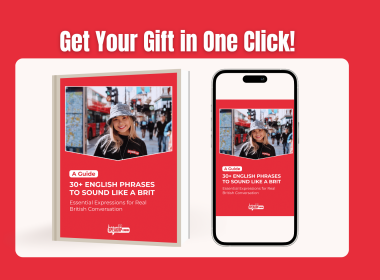
And what better way to celebrate than by giving you a gift — our amazing community of English learners around the world? We’ve created something you’ll love: a free downloadable guide called “30+ English Phrases to Sound Like a Brit”
Native speech can feel “too fast” because sounds link, disappear, or change. Here’s a clear routine to train listening so everyday English becomes easier to follow.
This guide helps you figure out if you should say I went or I've gone. The Present Perfect Tense helps link past stuff with what's happening now. It boosts the clarity, confidence, and naturalness of your speech.
When AI is becoming a part of everyday life, you might ask yourself if you can use it to learn the English language. Can you? Here we examine how AI can benefit language learning.