



7 Phrases British People Rarely Say (and What to Say Instead)
Even if you’ve been studying for years, certain phrases act like a “linguistic giveaway,” marking you as a learner rather than a fluent speaker. British English is full of subtle quirks. If you want to blend in at a London pub or a Chelsea cafe, avoid these seven common slips!

Ready to take your English from “textbook” to “London local”? At Speak Up London, our General English Courses are designed to help you navigate real-world conversations with confidence. Whether you’re studying on Oxford Street or online, we focus on the nuances that make you sound like a native.
1. “I’m very agree”
This is a classic “false friend” from other languages. In English, agree is a verb, not an adjective. You wouldn’t say “I am walk,” so don’t say “I am agree.”
- The Fix: “I completely agree” or “I totally agree.”
- Wrong: “I’m very agree with your point.”
- Right: “I completely agree with you.”
2. “Can you borrow me…?”
This one is a headache for many students! Just remember the direction of the object:
- Lend: To give something (away from you).
- Borrow: To take something (toward you).
- The Fix: “Can you lend me…?”
- Quick Trick: I borrow, You lend.
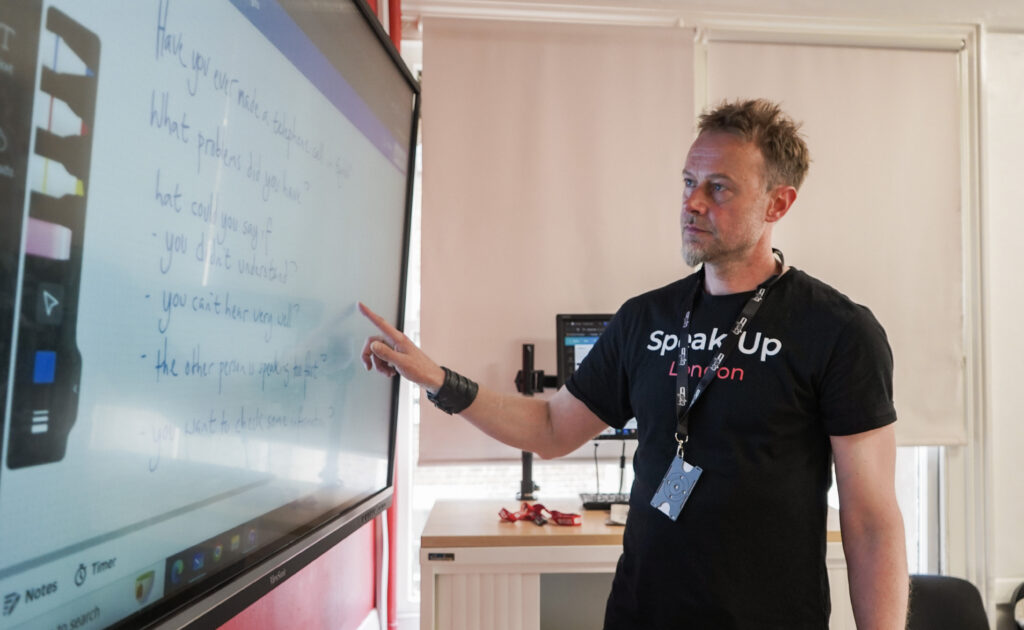
Want to hear these phrases in action? To help you master the perfect British inflection and catch those subtle pronunciation cues, we’ve put together a visual guide. Watch the full video explanation with our teacher, Kit, as he breaks down these common slips with natural examples and expert tips on how to sound like a local. It’s the quickest way to ensure you don’t just know the rules, but you actually sound the part.
3. “I am boring”
Be careful with this one—you might accidentally insult yourself!
- Boring: Describes the thing/person causing the feeling (The movie is boring).
- Bored: Describes your internal feeling.
- The Fix: “I am bored.”
- The Difference: If you say “I am boring,” you’re telling people you aren’t an interesting person!
4. “Do you can…?”
In English, “can” is a modal verb; it doesn’t need the help of “do” to form a question. It likes to stand alone!
- The Fix: “Can you…?” or “Are you able to…?”
- Wrong: “Do you can help me with my bags?”
- Right: “Can you help me?”
5. “I have 25 years”
In many European languages, you “have” age. In English, age is a state of being.
- The Fix: “I am 25 years old.”
- Note: You can also just say “I’m 25.” British people often drop the “years old” entirely.
6. “Where is the toilet at?”
Ending this sentence with “at” is what we call a redundant preposition. It doesn’t add any meaning, and it sounds a bit clunky to a British ear.
- The Fix: “Where is the toilet?”
- The British Way: If you want to sound truly local, use the word “loo.” * Example: “Excuse me, where’s the loo?” (Simple, natural, and very British!)
7. “I will call you back in a minute”
British people can be surprisingly literal with time. If you say “a minute,” some people might actually expect their phone to ring in 60 seconds! If you mean “sometime soon,” use a more flexible word.
- The Fix: “I’ll call you back soon” or “I’ll call you later.”
- Pro Tip: This prevents people from thinking you’ve forgotten about them when you call two hours later.
Quick Recap: Sound Like a Native
Instead of… | Try saying… |
I’m very agree | I completely agree |
Can you borrow me | Can you lend me |
I am boring | I am bored |
Do you can | Can you |
I have 25 years | I am 25 |
Where is the toilet at | Where’s the loo? |
Call you in a minute | Call you soon |
Master the Language with Speak Up London
Small changes make a massive difference in how confident you feel. If you’re ready to stop translating in your head and start speaking naturally, come join us!
Our General English courses right here on Oxford Street are the perfect way to immerse yourself in the language while enjoying the heart of London. We offer flexible schedules and a supportive community of teachers who can’t wait to help you succeed. Explore our General English Courses and take the first step toward fluency today!
